Channelview sits along the San Jacinto River where persistent humidity from the water and hot summers creates ideal conditions for mold behind walls and under floors. Homes built before 1980 often have limited ventilation and older insulation that traps moisture after even minor leaks. When hurricanes push water into Cloverleaf or Baytown-adjacent streets, the damp soil and poor drainage keep crawl spaces wet for weeks, letting colonies spread into framing before homeowners notice musty odors.
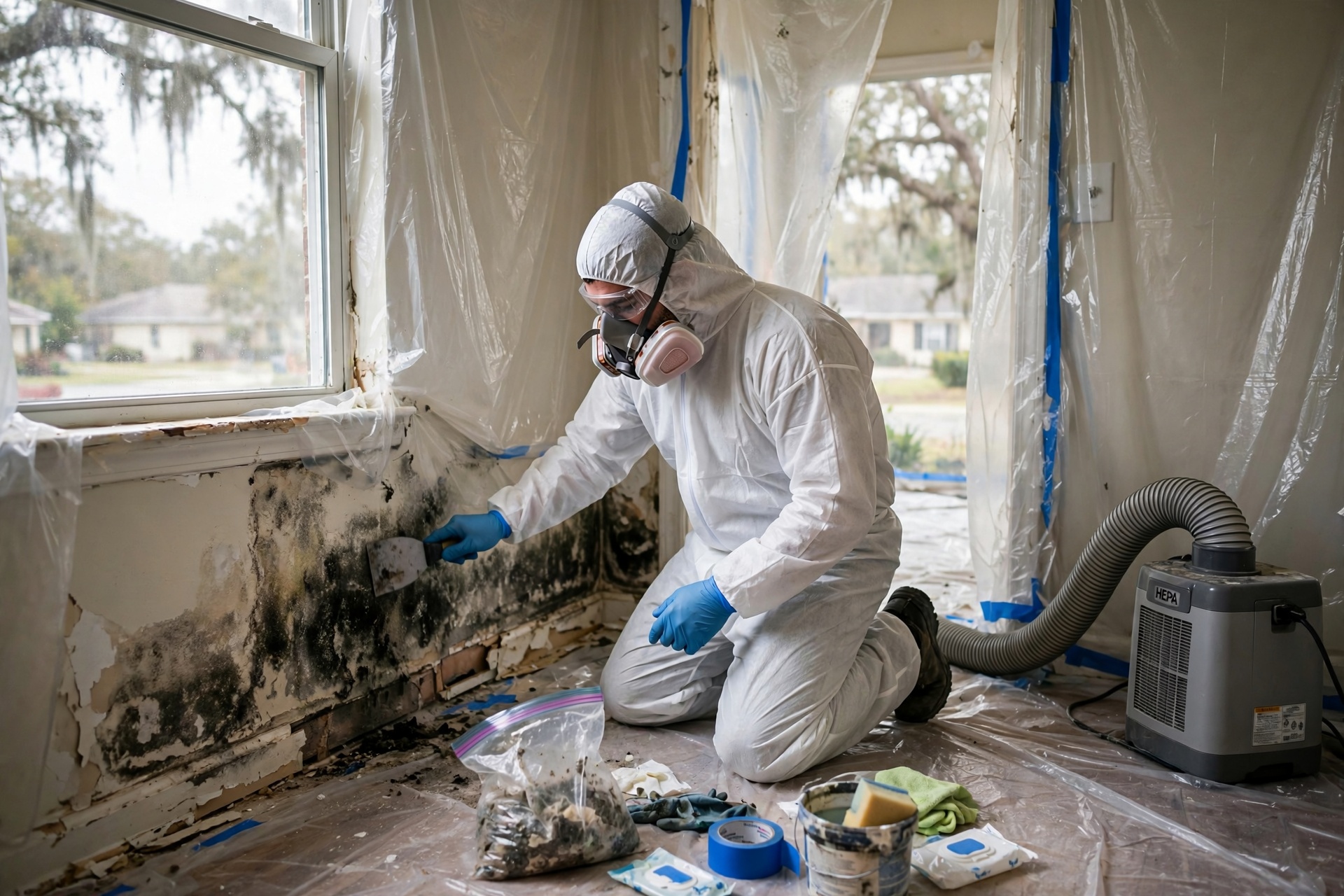
Mold remediation here starts with isolating the affected zone to prevent spores from moving into living areas during removal. Technicians use negative air machines and HEPA filtration while cutting out saturated drywall and insulation, then treat remaining surfaces with antimicrobial solutions that penetrate porous wood. Post-remediation air sampling confirms levels drop below outdoor baselines before new materials go in, a step that matters in La Porte and Houston homes where cross-contamination from shared HVAC systems is common.
Hurricane season brings the biggest volume of calls because floodwater from the river often carries silt that holds moisture against foundations for months. Mild winters do not stop growth; instead they allow hidden colonies to remain active inside wall cavities until the next warm spell. Crews working from the Sheldon Road location respond within hours to contain these jobs before they affect neighboring properties in the same block.
Technician insight
In Channelview the thing that catches most people out with mold remediation is how the San Jacinto River keeps crawl spaces damp long after a storm passes. Older homes along Sheldon Road and in Cloverleaf often have dirt floors and no vapor barriers, so colonies keep returning unless the soil moisture is addressed at the same time as the visible growth.
River-adjacent crawl space after heavy rains
Water from the San Jacinto River had seeped under a Cloverleaf home for two weeks. Inspection found active growth on joists and insulation. Crews removed saturated materials, installed a sealed vapor barrier, and ran dehumidifiers until readings dropped below 55 percent. Follow-up sampling showed levels returned to normal outdoor baselines.
Mold Remediation Services We Offer
✓Attic Mold Remediation
Removes mold colonies in attics where roof leaks and poor ventilation meet summer humidity, then restores airflow to prevent recurrence in Channelview homes.
✓Crawl Space Mold Treatment
Targets growth under homes caused by river-adjacent moisture and rising damp, including vapor barrier installation to keep soil humidity from reaching floor joists.
✓Post-Flood Mold Removal
Addresses mold after hurricane or heavy rain events that push San Jacinto River water into basements and garages across Cloverleaf and nearby streets.
✓HVAC Mold Remediation
Cleans mold inside ductwork and coils that spreads spores through entire houses, especially after extended humid periods common in Harris County.
✓Drywall and Insulation Replacement
Removes and replaces water-damaged materials behind walls where hidden growth develops in older Channelview construction.
Mold Remediation Cost in Channelview, TX
| Service | Typical Range | What Affects It |
|---|---|---|
| Initial inspection and sampling | $250–$450 | Includes moisture mapping and lab report |
| Small contained remediation | $800–$1,800 | Single room under 100 sq ft |
| Whole-home remediation | $3,500–$7,500 | Multiple rooms plus HVAC cleaning |
| Crawl space or attic treatment | $1,200–$3,000 | Depends on access and insulation removal |
| Post-flood emergency response | $2,000–$5,000 | Includes containment after river flooding |
Ranges are typical for Channelview, TX and confirmed with an exact written quote before any work starts.
How it works
- 1
Inspection and Moisture Mapping
Technicians locate all affected areas using moisture meters and thermal imaging, checking attics, crawl spaces, and walls near the San Jacinto River.
- 2
Containment Setup
Plastic barriers and negative air pressure isolate the work zone so spores do not travel into clean rooms or shared HVAC systems.
- 3
Removal and Cleaning
Damaged materials are cut out and disposed of, then surfaces receive antimicrobial treatment before drying equipment runs.
- 4
Verification and Clearance
Air and surface samples confirm mold levels match outdoor baselines before reconstruction begins.
Pricing
Pricing varies by square footage affected, access difficulty, and whether hurricane flooding or ongoing river humidity is involved.