2026-10-19 ·
How Humidity Levels in Channelview Trigger Mold
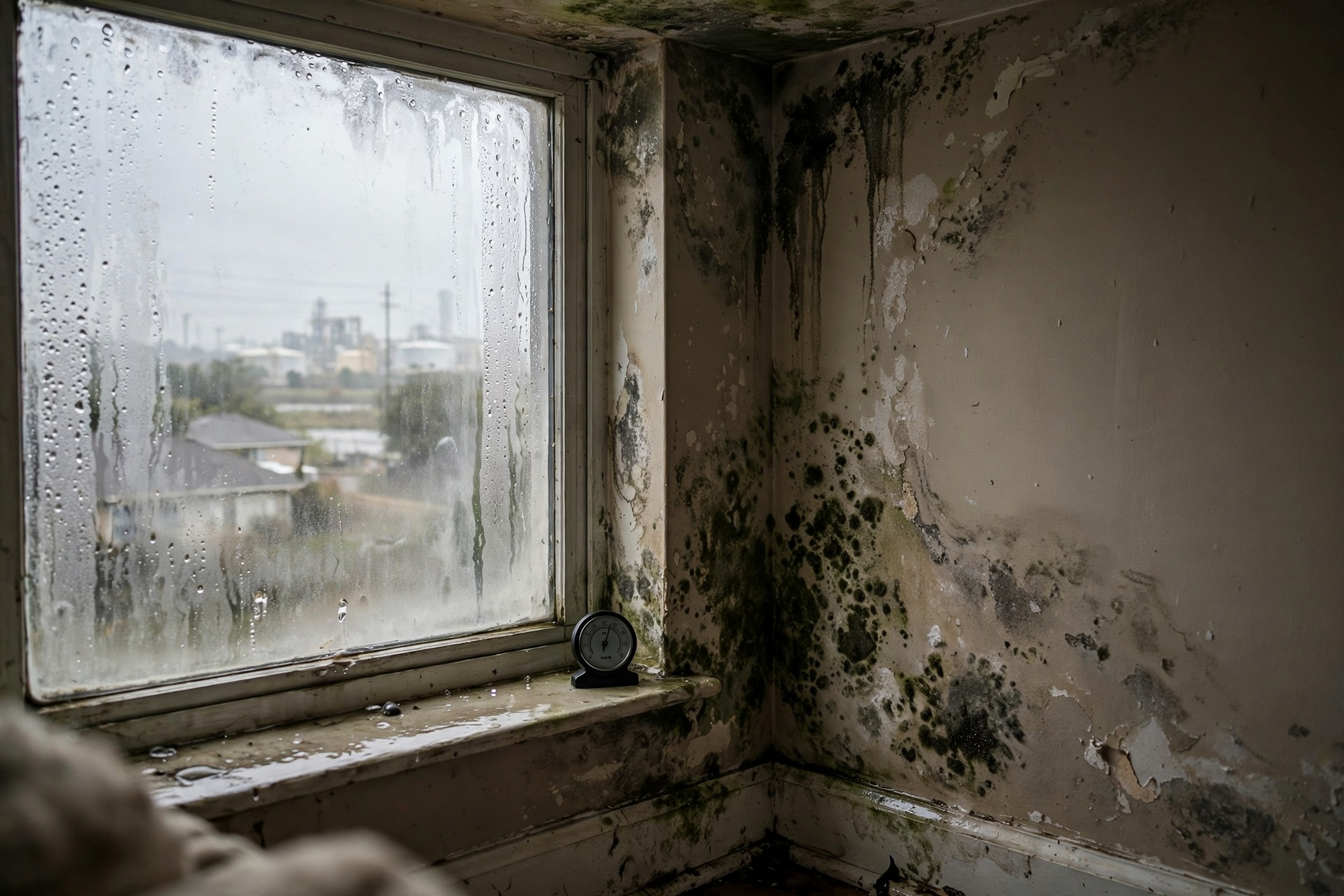
Channelview humidity routinely climbs above 60% relative humidity for stretches longer than 48 hours during summer, allowing mold spores to germinate on porous materials inside homes. The combination of Gulf moisture, proximity to the San Jacinto River, and mild winters that rarely drop below 40°F keeps surfaces damp enough for growth even when outdoor temperatures feel comfortable. Homes in Cloverleaf and along the Sheldon Corridor often see this pattern first because older single-story construction with limited ventilation traps the moisture that moves in from the river basin.
Humidity Thresholds That Trigger Mold Growth
Relative humidity above 60% sustained for 48 hours starts the clock on mold colonization in Channelview. Once indoor levels reach 65-70%, common during June through September, spores settle on drywall paper, carpet backing, and wood studs within one to two days. At 75% or higher, growth accelerates and visible colonies can appear in under a week on bathroom ceilings or closet walls. Residents near Channelview Park notice faster issues because afternoon river breezes push additional moisture through single-pane windows and unsealed soffits. Monitoring with a digital hygrometer placed in the lowest living area gives early warning before hidden growth behind baseboards requires full mold remediation.
Seasonal Humidity Patterns in Channelview
Hot humid summers dominate Harris County weather from May into October, with dew points frequently above 70°F and little nighttime relief. These conditions keep crawl spaces and attics at 65-80% relative humidity even after sunset, feeding mold on insulation and roof decking. Mild winters bring occasional cold fronts that create condensation on cooler interior surfaces when warm moist air meets chilled walls. Hurricane season adds sudden spikes when storms stall over the San Jacinto River Basin and drop several inches of rain in 24 hours, saturating soil around foundations in Old River Terrace and Sterling Green. Post-storm drying can take weeks without mechanical dehumidification, allowing mold to spread through HVAC systems.
How Local Terrain and Housing Stock Affect Moisture
Channelview sits on flat coastal prairie with clay-heavy soils that hold water after heavy rains, keeping foundation perimeters damp for days. Many homes built before 1990 feature slab-on-grade construction with limited vapor barriers, allowing ground moisture to migrate into flooring. Properties along the Sheldon Corridor sit closer to the river and experience higher water tables, increasing basement and crawl space humidity year-round. Newer subdivisions in Woodforest District still contend with the same summer dew points, but better attic ventilation helps only if homeowners run exhaust fans during cooking and showers. Without consistent moisture control after mold removal, these structural realities allow recurrence within one or two humid seasons.
Practical Monitoring Steps for Channelview Residents
Place a calibrated hygrometer in each major living zone and record readings twice daily during summer months. Keep indoor relative humidity between 45-55% by running air conditioning set to 74-76°F and using bathroom exhaust fans vented to the exterior. Check attic insulation for dark spots after any storm that drops more than two inches of rain, especially near the San Jacinto River. When levels stay above 60% for more than two days, schedule a professional inspection before colonies expand behind drywall. Homeowners in Cloverleaf and Bayou Estates often combine these checks with post-hurricane mold checks for Channelview residents to catch hidden growth early.
When Professional Mold Remediation Becomes Necessary
Visible growth larger than a dinner plate or musty odors in multiple rooms signal the need for targeted mold remediation rather than DIY cleaning. Technicians use containment barriers and HEPA filtration to prevent spores from spreading through the HVAC and air duct mold remediation process. In slab homes common to Channelview, removing affected baseboards and checking for moisture under flooring prevents hidden colonies from reappearing after the next humid spell. Linking humidity control with moisture control after mold removal gives the best long-term results in this climate.