2026-10-19 ·
Spotting Black Mold in Older Channelview Homes
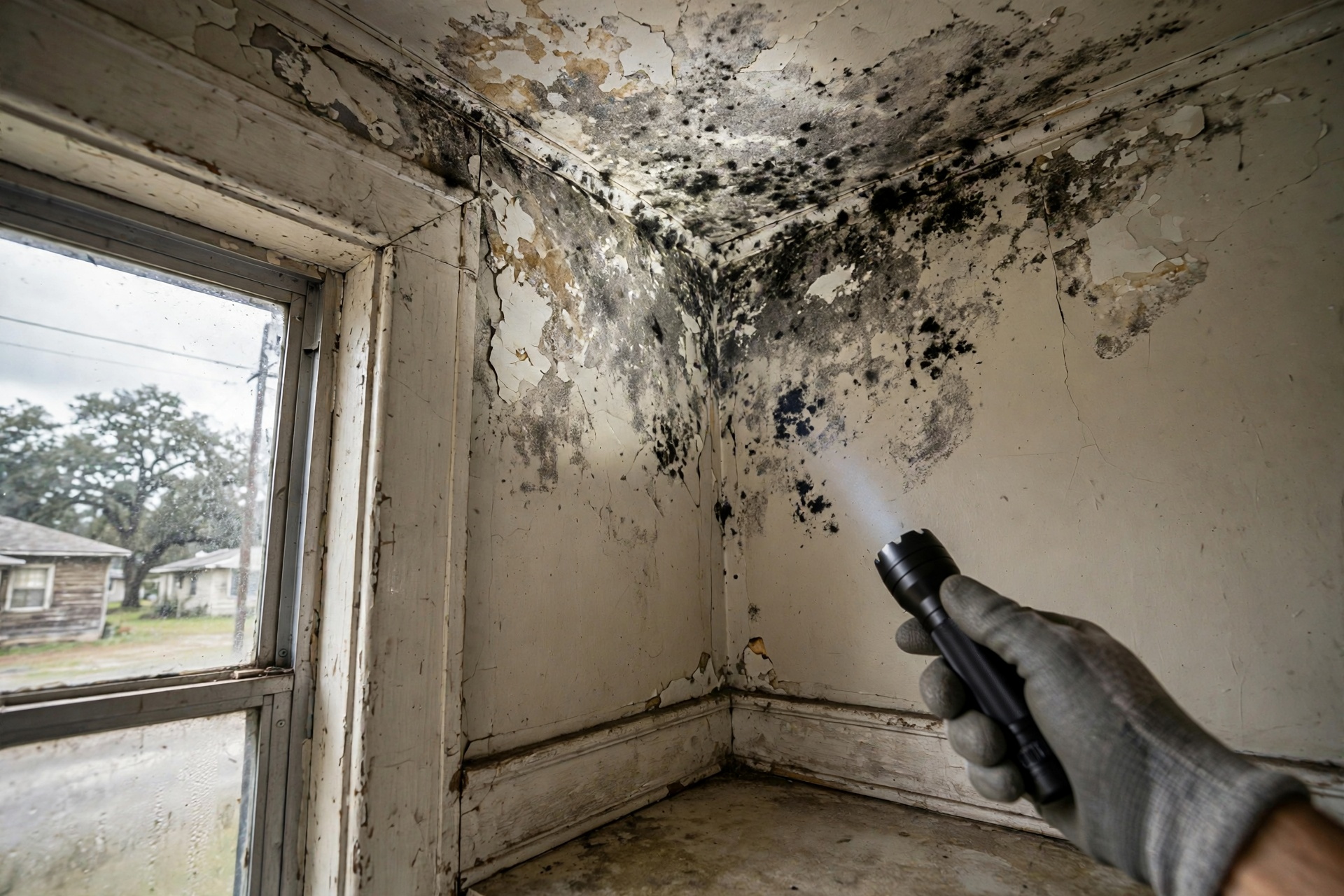
Black mold in older Channelview homes typically shows up first along ceiling joints and baseboards in bathrooms or kitchens where roof leaks or poor ventilation allow moisture to linger for weeks. Homes built before 1980 in neighborhoods like Cloverleaf and near Channelview Park often have plaster walls and crawl spaces that trap humidity from the San Jacinto River basin, creating ideal conditions for growth within 48 hours of water exposure.
Common Signs of Black Mold Growth
Homeowners in Harris County notice black mold through visible dark patches on drywall or wood framing that do not wipe away easily. A persistent musty odor in closets or behind appliances often signals hidden colonies even when nothing shows on the surface. Warping floorboards near the Sheldon Corridor or discoloration on HVAC vents point to airborne spores circulating through ducts after hot humid summers raise indoor moisture levels above 60 percent. Residents in Baytown and La Porte report similar issues when mild winters fail to dry out foundations fully, allowing mold to spread from small spots to larger areas over 8–12 weeks.
Typical Problem Areas in Channelview Homes
Attics in older Channelview properties frequently develop black mold along insulation edges where roof leaks from hurricane remnants collect and stay trapped under low ventilation. Crawl spaces under homes near the San Jacinto River stay damp year-round due to high water tables, leading to growth on joists and subflooring within months of heavy rain. Bathrooms and closets built with original tile in Cloverleaf neighborhoods trap steam that condenses on cooler walls, especially after the area’s frequent summer storms. Post-water-damage mold remediation crews often find colonies starting in these exact spots when homeowners delay inspection after flooding events.
How Local Weather Patterns Speed Mold Development
Hot humid summers in Channelview push relative humidity high enough that any small leak in an older home creates black mold within days rather than weeks. Mild winters with temperatures rarely dropping below freezing allow moisture from the previous season to remain in walls and attics instead of evaporating. Hurricane risk brings sudden heavy rains that overwhelm gutters on pre-1970 homes in the Sheldon Corridor, sending water into wall cavities where it sits undetected. Checking moisture levels after storms prevents colonies from expanding into HVAC systems or drywall, as detailed in related guidance on humidity triggers.
When Professional Inspection Becomes Necessary
If black patches exceed the size of a quarter or the musty smell returns after cleaning attempts, schedule a mold inspection through services focused on Channelview properties. Older homes in areas like Old River Terrace often require targeted testing in multiple rooms because spores travel through shared air ducts. Homeowners who notice recurring issues after tenant turnover or following hurricanes benefit from post-hurricane mold checks that locate hidden growth before it affects structural wood. Contacting 24/7 emergency service at 413-475 Sheldon Rd ensures crews respond before small spots turn into widespread remediation needs across the home.