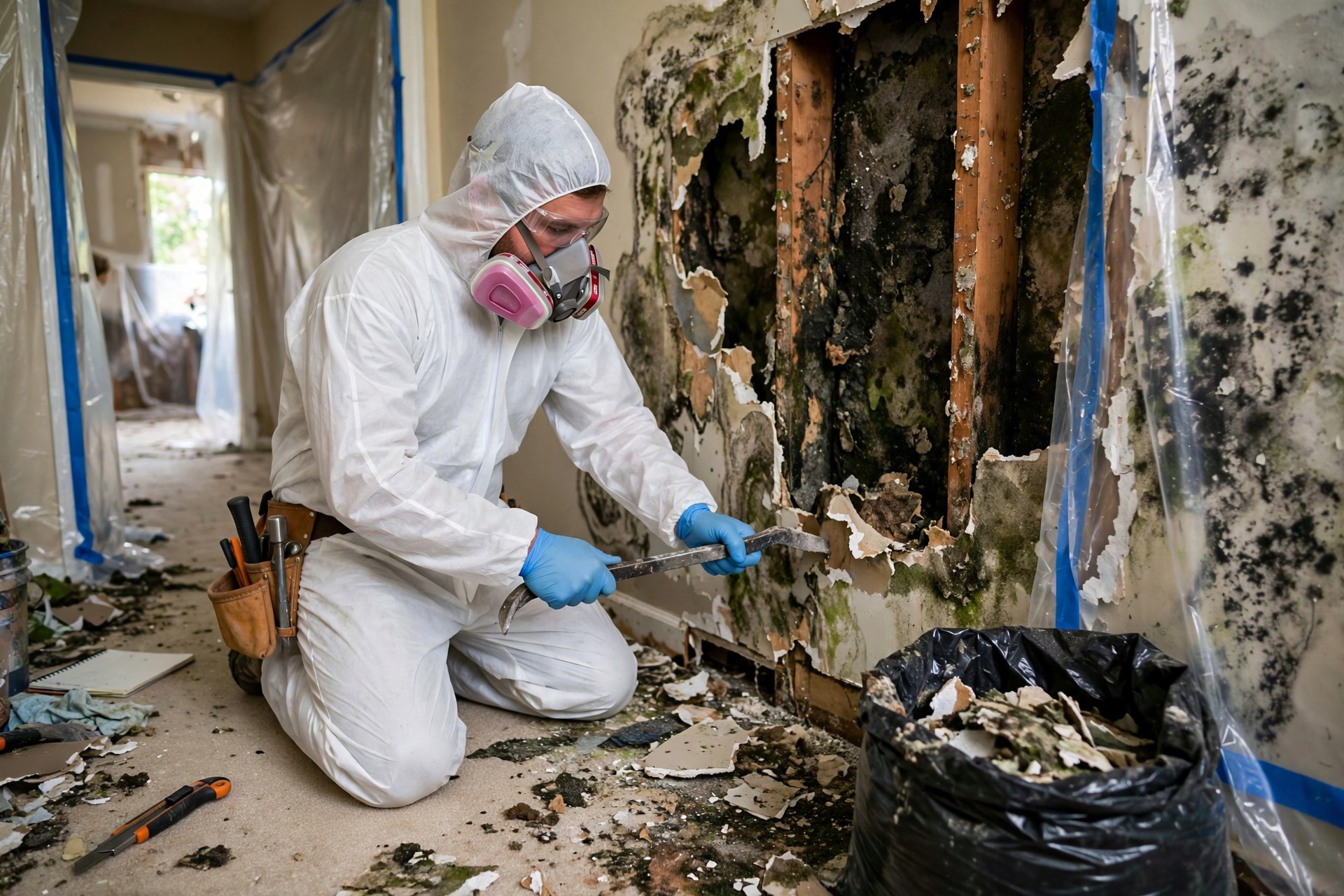
Channelview homes built before the 1990s often use paper-faced gypsum that absorbs moisture quickly when humidity spikes above 70 percent during summer months. Near the San Jacinto River and in Cloverleaf, storm surge or heavy rain from hurricanes can push water into wall cavities through weep holes or foundation cracks, leaving hidden growth behind baseboards. Removal crews must cut at least 18 inches beyond visible staining and bag materials on site to prevent spore release into living spaces.
In Harris County, older single-story ranch houses common along Sheldon Road frequently have textured drywall that hides early mold until it reaches the paper backing. Technicians test moisture levels in adjacent studs and insulation before deciding whether to replace only the lower two feet or entire sheets. Failure to address the source, such as roof leaks common after Baytown-area storms, allows regrowth within weeks once temperatures climb again.
La Porte and Houston commuters who live in Channelview face added risk when air conditioning units cycle on and off during mild winters, creating condensation on cooler wall surfaces. Proper removal includes HEPA vacuuming of exposed framing and application of antimicrobial coatings rated for porous materials. Local crews coordinate with homeowners to stage work around school schedules and avoid blocking driveways on narrow neighborhood streets.
Technician insight
In Channelview, the thing that catches most people out with Mold-damaged drywall removal is how water from the San Jacinto River backs up into slab foundations during hurricanes and travels behind baseboards into older gypsum that never fully dries before summer humidity returns.
Cloverleaf Flood Damage
After a hurricane pushed water into a Sheldon Road home, mold appeared on lower drywall near the garage. Inspection showed saturated insulation and studs. Crews removed the bottom 18 inches of drywall across two walls, treated the framing, and documented everything for the insurance adjuster. The homeowner was able to reopen the space within a week once new drywall was installed.
Mold-damaged Drywall Removal Services We Offer
✓Lower Wall Drywall Removal
Cuts and disposes of moldy bottom sections up to 24 inches high while preserving upper walls in flood-prone Channelview homes.
✓Full Sheet Drywall Extraction
Removes entire affected sheets when growth has penetrated seams near the San Jacinto River corridor after heavy rains.
✓Stud and Insulation Inspection
Checks framing and batts behind removed drywall for hidden moisture before reinstallation in Cloverleaf properties.
✓HEPA Containment Setup
Installs negative air machines and plastic barriers to isolate work zones during removal in occupied Channelview residences.
✓Post-Removal Framing Treatment
Applies EPA-registered antimicrobials to exposed wood studs after drywall is taken out to limit regrowth in humid summers.
Mold-damaged Drywall Removal Cost in Channelview, TX
| Service | Typical Range | What Affects It |
|---|---|---|
| Small patch removal (under 10 sq ft) | $250–$450 | Single wall section in accessible room |
| Standard lower wall removal (per linear foot) | $35–$65 | Includes containment and disposal |
| Full room drywall extraction | $800–$1,600 | Multiple walls plus insulation inspection |
| Additional framing treatment | $150–$300 | Antimicrobial application after removal |
Ranges are typical for Channelview, TX and confirmed with an exact written quote before any work starts.
How it works
- 1
Initial Moisture Mapping
Technicians use meters to trace water intrusion paths from roofs or foundations common in Channelview after hurricanes.
- 2
Containment And Air Filtration
Plastic sheeting and HEPA units isolate the work area to keep spores from spreading into other rooms.
- 3
Controlled Drywall Removal
Affected sections are scored, cut, and double-bagged without breaking them apart inside the home.
- 4
Framing Treatment And Documentation
Exposed studs receive antimicrobial spray and photos are taken for insurance records before cleanup.
Pricing
Costs vary with square footage, number of walls, and whether insulation or studs also need treatment.