2026-10-19 ·
Drying Out a Channelview Crawl Space After Rain
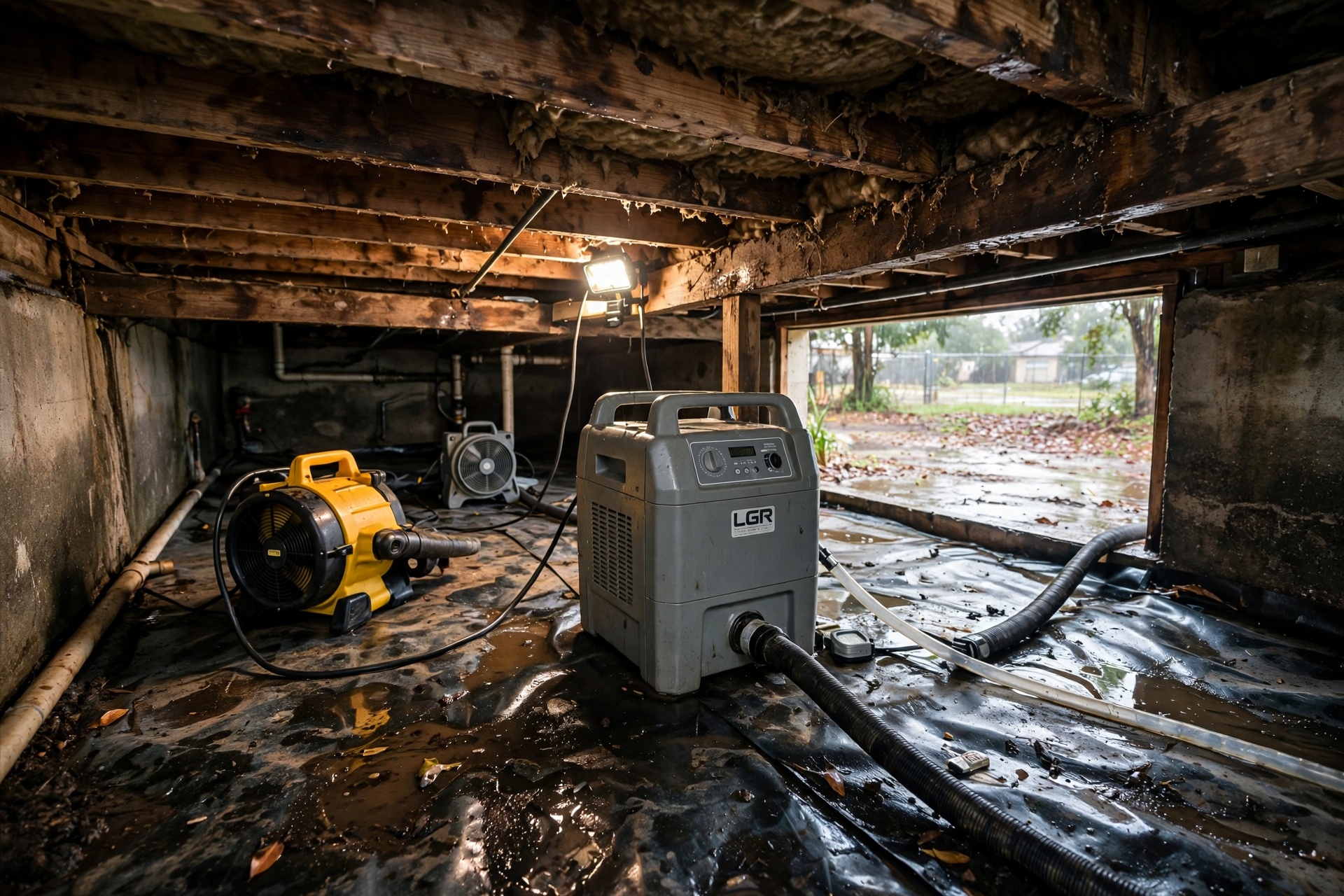
In Channelview, drying a crawl space after rain usually requires 4–10 days of active dehumidification and airflow, depending on how much water entered and the home's ventilation setup. Homes in neighborhoods like Cloverleaf and along the Sheldon Corridor sit on low-lying ground that holds moisture longer because of the clay-heavy soil and proximity to the San Jacinto River. After a typical summer thunderstorm or hurricane remnant, standing water can linger under pier-and-beam houses common in Channelview and nearby Baytown.
Checking Water Entry Points After Rain
Start by locating every place water entered the crawl space. In Channelview, roof runoff often pools against foundations because many homes built before 1980 lack proper grading toward the street. Check the perimeter for gaps where the San Jacinto River floodwaters or heavy rain from Houston storms push water under the house. Look at plumbing penetrations and HVAC condensate lines, which frequently leak during the long humid summers. Document any wet insulation or soil saturation so you know exactly which sections need the longest drying time. Homes in Old River Terrace and Sterling Green commonly show water tracking along the north side of the crawl space after Gulf moisture moves through Harris County.
Setting Up Equipment for Effective Drying
Place commercial air movers and dehumidifiers to create a continuous airflow loop across the entire crawl space floor. In Channelview's mild winters, you can run equipment longer without freezing concerns, but the high summer humidity means you need units rated for at least 70 pints per day to pull moisture from the air. Position fans to blow across wet soil toward exhaust points rather than recirculating the same damp air. Monitor relative humidity hourly until it stays below 55 percent for 48 consecutive hours. Many operators in the Sheldon Corridor also use moisture meters on floor joists to confirm wood moisture content drops below 16 percent before stopping equipment.
Preventing Mold After the Space Dries
Once the crawl space reaches target dryness, address any organic material that stayed wet for more than 48 hours. Crawl space mold remediation becomes necessary when you see growth on insulation or subflooring common in older Channelview homes. Apply antimicrobial treatments only after the structure is dry so the product can penetrate properly. Install vapor barriers and improve exterior drainage to reduce future water entry from the San Jacinto River basin. Post-water-damage mold remediation protocols help when rain events repeat during hurricane season. Readers dealing with repeated issues often review cost factors for mold remediation in Channelview to plan long-term fixes.
Monitoring and Follow-Up Steps
Continue checking the crawl space every few weeks after the initial drying, especially after the next rainfall. In Channelview Park and Northshore areas, seasonal humidity spikes can reintroduce moisture even after equipment removal. Consider adding a small dehumidifier with a drain line if the home sits close to the river and experiences frequent high water tables. Keep gutters clear and ensure downspouts direct water at least six feet from the foundation. These steps reduce the chance that future rains will require another full drying cycle in homes throughout Harris County.