2026-10-19 ·
Removing Musty Odors From Channelview Attics
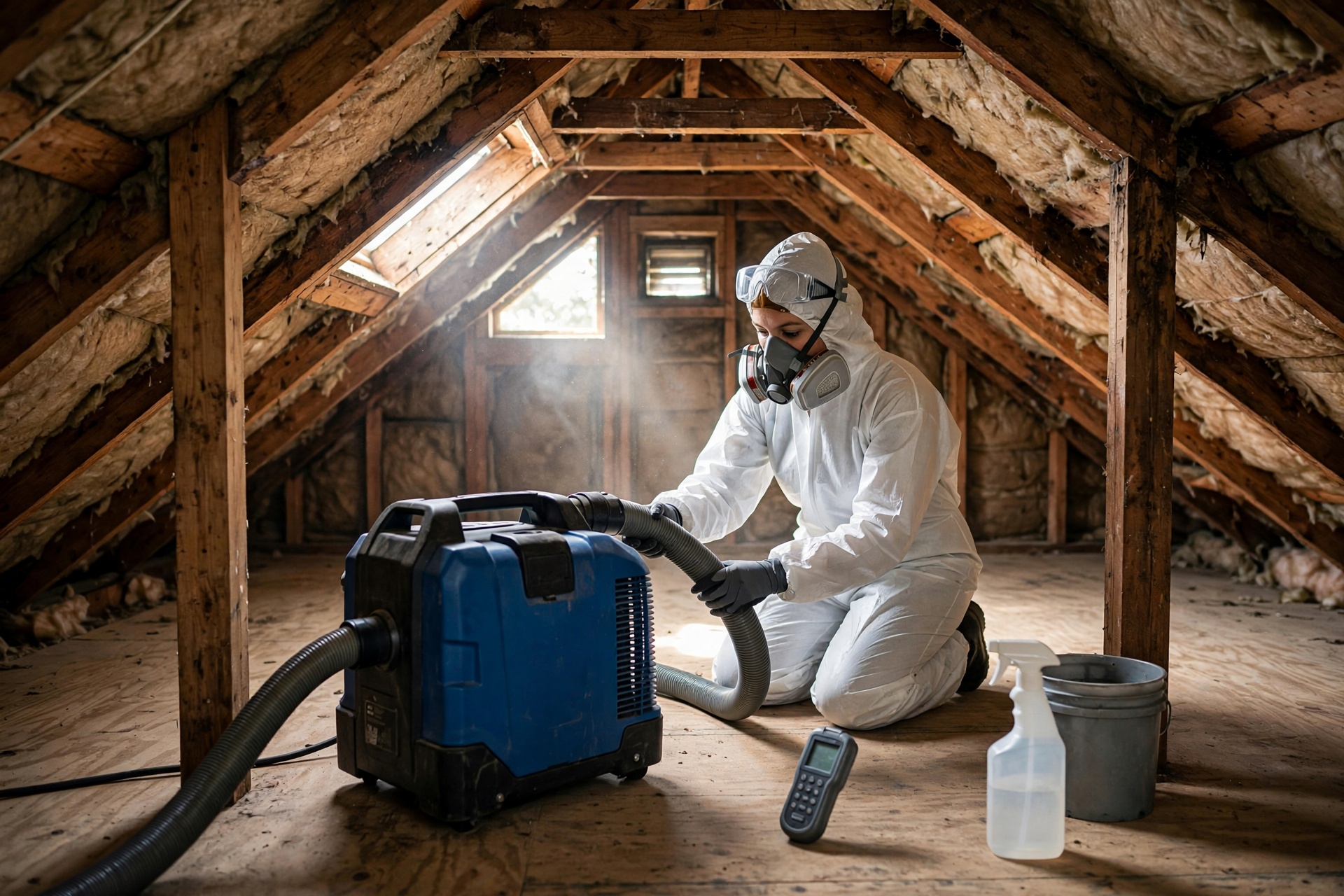
Musty odors in Channelview attics are removed by locating moisture trapped behind insulation or in roof decking, then performing targeted mold remediation followed by improved airflow. Homes near the San Jacinto River and in neighborhoods like Cloverleaf frequently face this issue because mild winters allow year-round humidity while hurricane seasons deliver sudden water intrusion that fiberglass batts hold for months.
Identifying the Source of Attic Odors
Channelview homes built before 1990 often lack ridge vents and have single-layer roof decking that sweats during the area's hot humid summers. When moisture from the San Jacinto River basin infiltrates through soffits or around plumbing stacks, it condenses on cooler sheathing and feeds mold colonies that release the characteristic musty smell into living spaces below. Walk the attic on a clear day and check for dark staining on north-facing rafters, soft spots near the ridge, and insulation that feels damp even when outdoor temperatures are mild. Pay special attention to areas above bathrooms and laundry rooms where exhaust fans vent directly into the attic rather than through the roof.
Removing Mold and Odor-Causing Materials
Once the moisture source is corrected, physically remove affected insulation and surface mold rather than relying on sprays that mask odors. Cut out stained drywall sections around ceiling penetrations, bag and remove wet cellulose or fiberglass, then HEPA-vacuum rafters and sheathing. In homes along the Sheldon Corridor, crews commonly encounter 8–12-year-old insulation that has absorbed repeated hurricane-season moisture and now requires full replacement. After removal, apply an antimicrobial rinse to wood surfaces and allow 48–72 hours of drying with commercial air movers before new insulation is installed. This sequence eliminates the odor at its root instead of temporarily covering it with sealers.
Improving Ventilation to Prevent Return
Channelview attics need balanced intake and exhaust to handle the county's humidity levels year-round. Install or enlarge soffit vents along the eaves and add a continuous ridge vent sized at 1 square foot per 150 square feet of attic floor area. In Cloverleaf subdivisions where homes sit close together, power attic ventilators tied to a humidistat help move air even when outdoor winds are blocked by neighboring roofs. Seal all ceiling penetrations with foam or caulk so conditioned air from below does not leak upward and create new condensation points. These changes keep relative humidity below the threshold that supports mold after the initial remediation is complete.
When to Call for Professional Attic Mold Remediation
If odors persist after basic cleaning or if black staining covers more than 10 square feet, professional attic mold remediation is required to contain spores and protect the rest of the home. Technicians use negative air machines and full PPE when working in confined Channelview attics that lack flooring. Homeowners in Baytown and La Porte who have dealt with similar river-basin conditions report that combining remediation with moisture control after mold removal prevents recurrence during the next humid summer. For guidance on how local humidity patterns drive these issues, see How Humidity Levels in Channelview Trigger Mold.